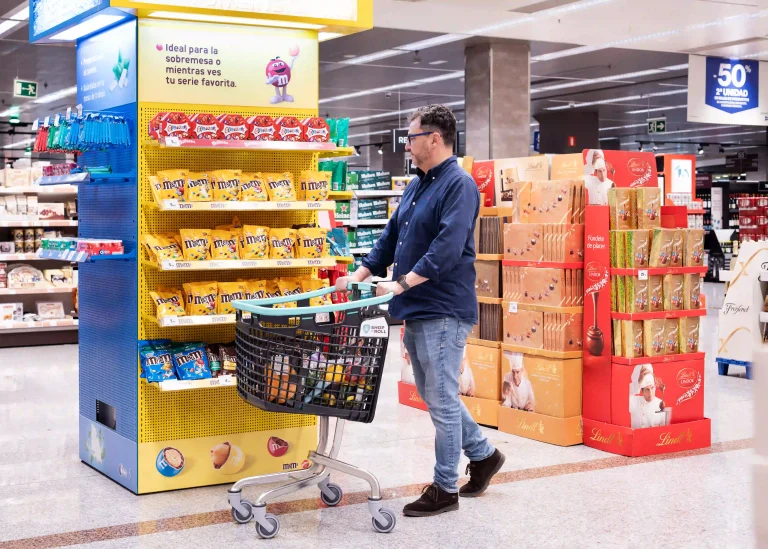
How to optimise products on the supermarket aisle to increase sales
The strategic arrangement of products on supermarket shelves is, without a doubt, a decisive factor in sales performance.
Key factors such as placement in prominent, high-traffic areas or organisation by category make the shopping experience easier for customers, speed up decision-making and create clear opportunities for cross-selling.
For this reason, a well-planned shelf layout, reviewed and adjusted regularly, has a direct impact on sales by shaping the customer’s shopping experience.
What’s more, an optimised shelf doesn’t just make decision-making easier — it also drives additional purchases, providing a steady stream of revenue for the supermarket.
Best practices to optimise your supermarket shelves and boost sales
Optimising shelf space not only helps maximise sales, it also creates an inviting environment for shoppers.
Placement strategy
A product’s position on the shelf is like its address on the map to success. Place high-demand items or new arrivals in the most visible and busiest areas of the supermarket.
Take advantage of aisle ends, entrances and the areas close to the checkout to drive impulse purchases.
Categorisation
Organising shelves by category is essential. Group related products together to make it easier for customers to find what they need and to lift sales effortlessly.
For example, if someone is looking for pasta, placing pasta, sauces and seasonings together simplifies their experience and increases the chances of cross-selling.
Height and visibility
The height at which products are placed has a direct impact on their visibility and, therefore, on sales.
Eye-level products capture more attention, so it’s a good idea to reserve the lower shelves for children’s items or everyday essentials, and the upper shelves for products that need to stand out — whether due to special promotions or because they are premium.
Highlighted offers
When it comes to products on offer, don’t hide them. Place them in prominent areas to immediately grab your customers’ attention, as visible deals create a sense of urgency to buy.
You can set up dedicated sections or use eye-catching displays to showcase the offers and promotions that matter most at any given time.
Trends and seasonality
Adapt your shelf layout to seasonal trends and times of year. Reserve prime spots for seasonal products or those that follow the latest trends.
Changing the layout according to the season keeps customers engaged and can boost sales of specific products at strategic moments.
Strategic brand placement
Brand placement on the shelf is never random. The most recognised brands, or those with promotional agreements, are usually placed at eye level to make the most of their visibility.
That said, you should keep a balance and give emerging brands the chance to stand out in other areas.
Product rotation
Product rotation is more than just rearranging shelves — it’s a tactic to ensure fresh, high-demand products are always available.
Placing products so the oldest ones are at the front (the FIFO system) not only prevents losses from expiry but also improves the customer experience by offering fresher products.
Profit margin
Shelf layout shouldn’t only consider visibility, but also profitability.
For this reason, it’s wise to place high-margin products in strategic areas to maximise their visibility and drive sales.
Ongoing analysis and adjustments
There is no single formula for shelf layout, so it’s worth running periodic analyses to assess product performance and adjust the arrangement based on the results.
Stay tuned to your customers’ changing preferences and to market trends.